- Texas Firm Number F-23372
Permitting in Texas & Colorado
Wastewater Permitting for Treatment Facilities, Developments, and Municipal Projects
Comprehensive
Wastewater Solutions
Wastewater permitting is a critical step in planning, designing, constructing, expanding, or modifying a wastewater treatment facility. Whether you are developing a residential subdivision, commercial property, school, municipal facility, utility district, or decentralized treatment system, the permitting process determines how treated wastewater can be discharged, land-applied, reused, monitored, and regulated.
At JA Wastewater, we help property owners, developers, engineers, and utilities navigate the wastewater permitting process with clarity and confidence. Our team understands that permitting is more than paperwork. It involves regulatory strategy, environmental review, engineering documentation, public notice coordination, technical analysis, and communication with reviewing agencies.
We provide wastewater permitting support throughout Texas, with specialized experience in treatment facilities, decentralized wastewater systems, discharge permits, land application permits, permit amendments, renewals, and regulatory compliance.

What Is a Wastewater Permit?
A wastewater permit authorizes a person, facility, development, or municipality to either discharge or land apply treated wastewater under specific regulatory conditions. Depending on the project, the permit may allow treated effluent to be discharged into surface waters, applied to land, evaporated, reused, or managed through another approved method.
The purpose of wastewater permitting is to protect:
- Public health
- Surface water quality
- Groundwater resources
- Aquatic life and habitat
- Drinking water supplies
- Neighboring properties and communities
- Long-term environmental conditions
Permits typically establish effluent limits, monitoring requirements, reporting obligations, treatment standards, disposal methods, and operational conditions. These requirements help ensure that wastewater treatment facilities operate safely and that treated wastewater does not negatively impact nearby streams, lakes, aquifers, wells, or land application areas.
Types of Wastewater Permits We Support
Wastewater permitting needs vary based on location, flow, treatment method, ownership, discharge route, land availability, and environmental sensitivity. Our team assists with a range of permitting services, including:
- New wastewater permit applications
- Permit renewals
- Major amendments
- Minor amendments
- Transfer applications
- Texas Pollutant Discharge Elimination System permits
- Texas Land Application Permits
- Wastewater treatment facility permitting
- Decentralized wastewater facility permitting
- Municipal and private wastewater systems
- Reclaimed water and beneficial reuse coordination
- Public notice and affected landowner support

TPDES vs. TLAP
Choosing the Right Permitting Path
For Texas projects, wastewater facilities may require a TPDES permit when treated wastewater is discharged into surface waters of the state. A TLAP permit may be required when treated wastewater is land-applied instead of discharged to surface water. A TLAP does not allow for discharge of treated effluent, but rather all treated water must be taken up by a plants roots or evaporated.
TPDES Permit
A TPDES permit is typically used when treated wastewater will be discharged into a receiving water body, such as a stream, drainage feature, or other surface water route. These permits may include effluent limits for items such as carbonaceous biochemical oxygen demand, total suspended solids, ammonia nitrogen, phosphorus, and E. coli.
TLAP Permit
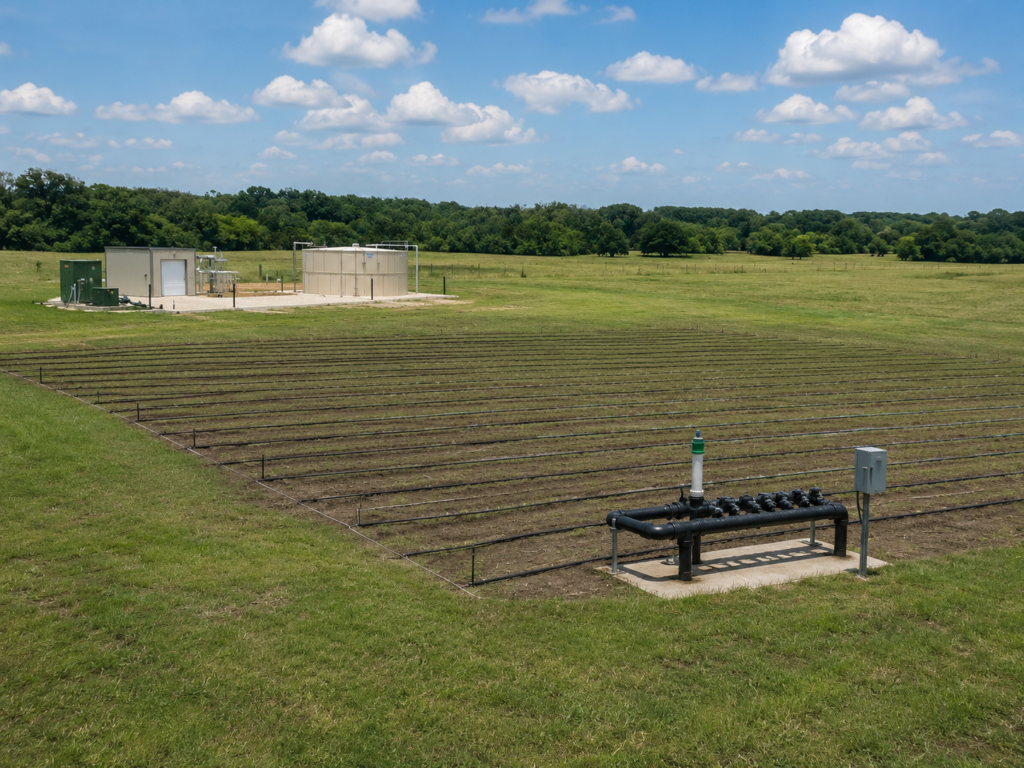
A TLAP permit is typically used when treated wastewater will be applied to land through surface spray irrigation or a subsurface area drip dispersal system. TLAP projects require careful consideration of disposal area size, soils, crops, storage, irrigation rates, wells, surface water setbacks, slopes, and sensitive environmental features.
The right path depends on several factors, including:
- Whether the site is in a sensitive environmental area
- Whether a potential discharge route exists
- Available land for disposal areas
- Proximity to wells, streams, property lines, floodplains, and wetlands
- Treatment facility location
- Long-term development phasing
- Construction and operational costs
- Public notice and affected landowner considerations
What Is Included in a Wastewater Permit Application?
A complete wastewater permit application requires both administrative and technical information. Missing, incomplete, or inconsistent information can delay the review process and lead to agency comments or notices of deficiency.
Typical application components may include:
- Applicant and co-applicant information
- Wastewater treatment facility location
- Discharge point or disposal area locations
- Affected landowner information
- Plain language summary
- Public involvement plan
- Flow phasing and projected wastewater flows
- Conceptual treatment facility layout
- Site drawings and maps
- Process flow diagrams
- Design calculations
- Buffer zone maps
- Photos of the treatment site and discharge location
- Solids management plan
- Nearby facility coordination
- Soil analysis for land application projects
- Water balance calculations for surface irrigation systems
- Recharge feature plans when applicable
Our wastewater professionals help assemble, review, and coordinate these materials so the application is organized, accurate, and aligned with regulatory expectations.
Regulatory Compliance and Environmental Considerations
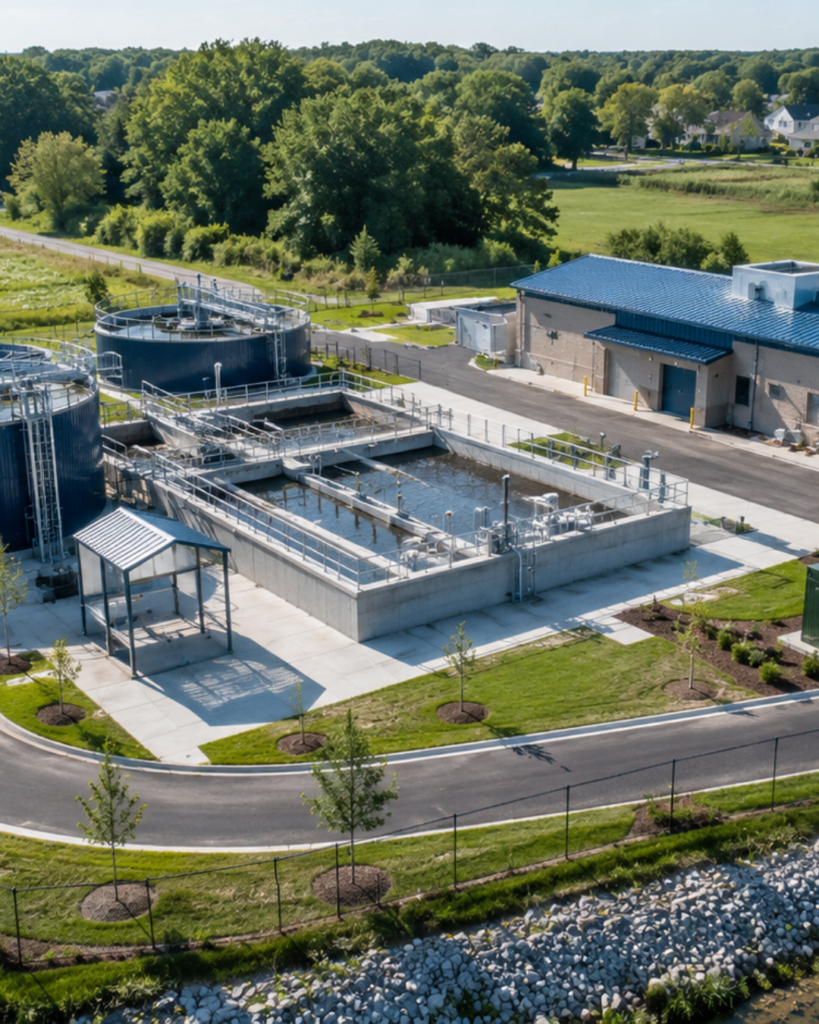
Wastewater permitting is closely tied to environmental protection. Before a facility is permitted, regulators may evaluate how the project could affect surface water, groundwater, nearby wells, floodplains, wetlands, aquifers, receiving streams, and adjacent properties.
Key environmental and compliance considerations may include:
- Effluent quality and treatment limits
- Monitoring and reporting requirements
- Discharge routes and downstream landowners
- Land application rates
- Storage pond or tank capacity
- Soil conditions and crop uptake
- Setbacks from public and private water wells
- Setbacks from surface water
- Floodplain protection
- Wetland avoidance
- Aquifer recharge features
- Public notice requirements
- Long-term permit renewals and operating conditions
By addressing these issues early, project teams can reduce the risk of permitting delays, redesign, public concerns, and compliance challenges after construction.
Wastewater Permitting Timelines
Wastewater permitting timelines vary based on permit type, agency review, project complexity, public notice requirements, environmental conditions, and whether the application receives technical comments.
A typical permitting process may include:
- Kickoff meeting and project information gathering
- Drafting and internal review
- Client review, signatures, photos, and approval
- Application submittal to the reviewing agency
- Administrative review
- Notice of receipt and intent to obtain permit
- Technical review
- Response to agency comments or deficiencies
- Draft permit issuance
- Notice of application and preliminary decision
- Public comment period
- Final permit issuance or additional public process
Because several steps depend on agency review and public notice timing, early planning is essential. Engaging an experienced wastewater engineering team at the beginning of a project can help align permitting with design, construction, financing, and development milestones.
Benefits of Working With Experienced Wastewater Professionals
Permitting a wastewater treatment facility is a technical and regulatory process. Working with experienced wastewater professionals can help your project move forward more efficiently and with fewer surprises.
JA Wastewater helps clients:
- Identify the appropriate permit type
- Understand regulatory requirements early
- Evaluate TPDES and TLAP feasibility
- Coordinate engineering and environmental documentation
- Prepare complete permit applications
- Address agency comments and technical review questions
- Support public notice requirements
- Plan for renewals, amendments, and future phases
- Reduce permitting delays caused by incomplete information
- Protect long-term compliance and operational reliability
Our goal is to help clients make informed decisions, avoid costly setbacks, and develop wastewater solutions that support both project goals and environmental responsibility.
Wastewater Permitting Service Areas
JA Wastewater provides wastewater permitting and engineering support for clients across Texas and Colorado, including property owners, developers, civil engineers, municipalities, utility districts, HOAs, commercial projects, schools, rural communities, and decentralized wastewater facility owners.
Whether your project involves a new treatment facility, an amendment to an existing permit, a land application system, a discharge route, reclaimed water planning, or regulatory coordination, our team can help guide the process from early feasibility through permit approval.
Frequently Asked Questions About Wastewater Permitting
A wastewater permit is required when wastewater will be treated and then either discharged to surface water or disposed of by land application, or when an existing authorized facility needs a change to its permitted flow, disposal method, outfall, treatment process, ownership, or permit conditions.
A TPDES permit authorizes the discharge of treated wastewater into surface waters. A TLAP permit authorizes treated wastewater to be applied to land instead of discharged to surface water. The best option depends on the site, receiving waters, available land, environmental sensitivity, and long-term project needs.
A major amendment is typically needed when a project makes significant changes to a permit, such as increasing final permitted flow, modifying disposal areas, relocating a wastewater treatment facility, or adding or relocating discharge points.
A minor amendment may be appropriate for smaller changes, such as certain flow modifications, treatment process changes, pond modifications, disinfection method changes, or adjustments that do not significantly alter the final permitted facility.
The timeline depends on the permit type, completeness of the application, technical review, public notice requirements, agency comments, and whether public hearing procedures are triggered. Starting early helps keep permitting aligned with project development and construction schedules.
Wastewater permitting requires engineering knowledge, regulatory experience, environmental understanding, and careful documentation. An experienced wastewater professional can help determine the correct permitting path, prepare a complete application, respond to agency comments, and reduce delays throughout the process.
Start Your Wastewater Permitting Project
If you are planning a wastewater treatment facility, development, expansion, permit amendment, or land application system in Texas or Colorado, JA Wastewater can help you understand your options and move forward with confidence.
Contact our team to discuss your wastewater permitting needs and the best path for your project.